
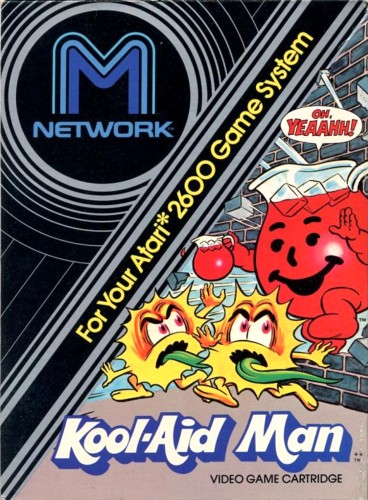
Kool-Aid Man is a single-player action game developed and published by Mattel Electronics for the Atari 2600 under its M Network label in 1983. Designed by Steve Tatsumi, it was created as a promotional tie-in featuring Kool-Aid Man, the advertising mascot of the Kool-Aid drink brand.
The game was initially available by mail order in exchange for proofs of purchase from Kool-Aid products and was later released through conventional retail distribution.
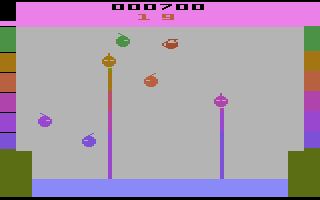
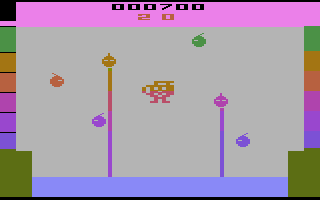
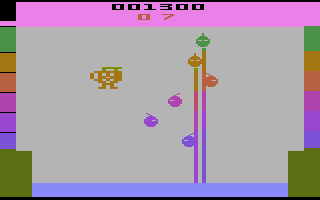
The action takes place in a suburban backyard containing a swimming pool. The player controls Kool-Aid Man in eight directions while creatures known as Thirsties repeatedly move across the screen. At intervals, individual Thirsties stop beside the pool and use their straws to drink its water. Only while they are drinking can Kool-Aid Man eliminate them by making contact, earning 100 points for each captured enemy.
Colliding with a moving Thirstie does not destroy Kool-Aid Man but sends him bouncing uncontrollably around the yard for a short time. The same effect occurs when he touches the surrounding walls or enters the swimming pool. During these moments, further impacts may prolong his uncontrolled movement while the remaining Thirsties continue draining the pool. The objective is to catch every Thirstie before all the water has been consumed; completing the task advances the player to a more difficult round.
Letters representing the three ingredients of Kool-Aid—water, sugar and Kool-Aid mix—occasionally travel across the screen. Collecting one restores some water to the pool and temporarily enlarges Kool-Aid Man, making him immune to the effects of moving Thirsties. This provides an opportunity to cross the yard more safely and reach enemies that have stopped to drink. The console’s difficulty switch can also be used to make the Thirsties move faster.
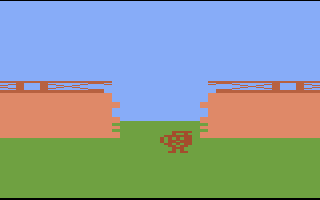
One of the game’s most recognizable visual features is its opening sequence, in which Kool-Aid Man crashes through a brick wall in imitation of the character’s television commercials. Although the game offers only a single setting and a relatively simple objective, the need to avoid moving enemies while quickly intercepting those draining the pool creates a distinctive combination of timing and spatial navigation. Its unusual promotional origin and direct use of a well-known advertising mascot have also made Kool-Aid Man a notable example of an early advergame.
Leave a Comment / Review: